Around 2010, I approached my doctor for help with my sleep issues. I was prescribed Lunesta and Ambien. With both medications, they “worked” in the sense I got to sleep, but I felt groggy all day the following day. And after the first few days, I couldn’t get to sleep.
Indeed that was my experience with any kind of sleep aid: I’d be able to get to sleep on the first night, maybe the next few, and that was it.
In 2014, I hit a wall. I was working 60 hours a week, and always exhausted. My beloved elderly cat had died, and it was the five year anniversary of my mother’s death. I needed some fucking sleep.
Luckily, my GP believed me, and referred me to a sleep doctor, with the suggestion I needed a full sleep study.
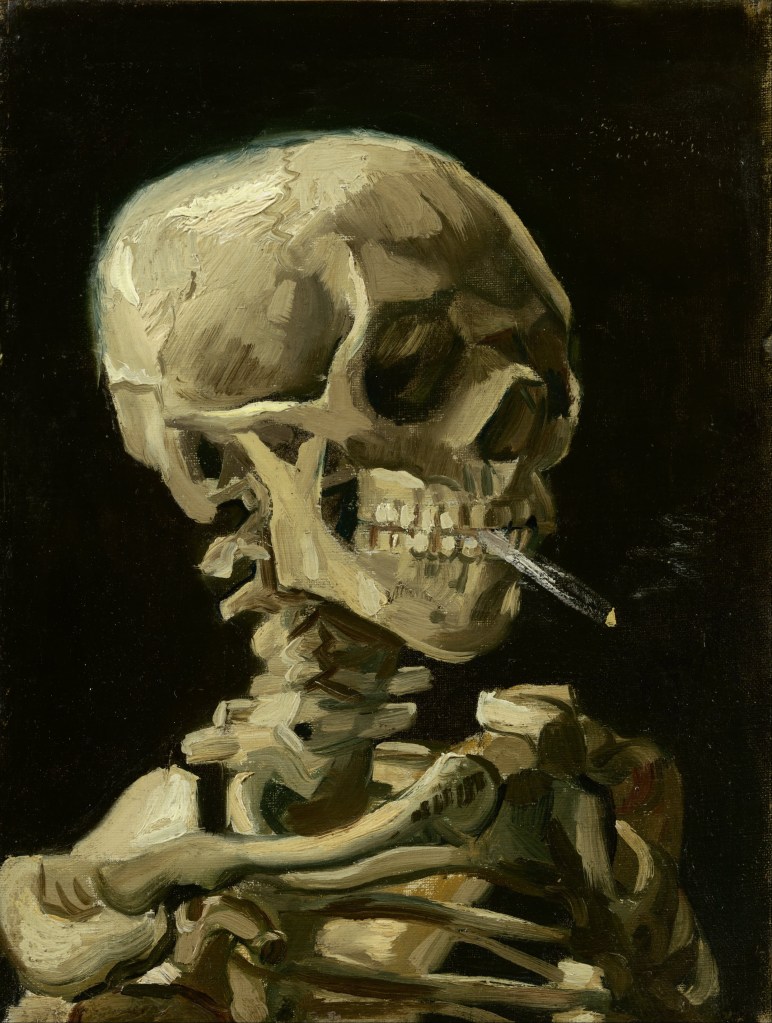
I waited nervously in the sleep doctor’s office, surrounded by anatomy posters and also a poster of van Gogh’s Skull of a Skeleton with a Burning Cigarette. I feared the doctor would tell me the same advice I’d been hearing for a decade: stop caffeine, no naps go to bed and wake up at the same time. . . .
She did suggest those things. So would my CBT-I doctor a decade later. A big difference, though, was that the sleep doctor (and previous doctors) had said, just do it. Like it’s that easy. Like a clueless boyfriend saying, “Just get over it!” when you tell them you are depressed. My CBT-I doctor helped me succeed by making progress in steps.
She said I was not a good candidate for an at-home study, so I’d complete my study at a clinic. And not just a basic study, but they would track everything. I think my crappy genetics helped me for once.
Do I snore? Yes
Were either of my parents diagnosed with sleep apnea? No, but you could hear my mother’s snoring rooms away; I’m positive she had it.
Is my father still alive? No, both of my parents are deceased.
How old was my father? 58.
Wow, that’s so young! How old was my mother? 54.
Ohhhhhhhhhh
Sleep apnea is a breathing disorder. During the night, the patient experiences pauses in breathing. This “pause” can last for seconds or even minutes. The amount of oxygen in the blood can get too low and carbon dioxide too high. As you’d expect, if left untreated, there is a greater risk for all kinds of things, including heart attack, diabetes, and car accidents.
My father was on an oxygen machine for a year before he died, and my mother and I suspected he’d suffered brain damage during one of his surgeries because of lack of oxygen. As I mentioned, I’m positive my mother had sleep apnea, and also suffered from lack of oxygen. So I know what it looks like to be slowly poisoned because you are not breathing properly.
Insurance was my first obstacle. My sleep study was approved but no one told me or contacted me or updated my online file. I had to call the sleep doctor to see what was going on, and then I had to call the sleep clinic to make the actual appointment.
The sleep clinic was in a city about 30 minutes from where I lived at the time. My husband drove me dropping me off around 8 PM. The clinic was housed in an older building, just one floor. The outside was brown siding and shingles; it didn’t look very medical. (It has since moved to that city’s “medical plaza” and is gleaming white.)
I was let in via a locked door; only patients being seen that night were allowed in. There wasn’t even a waiting room; I was immediately shown to my room (that next morning, I had to wait for my husband in the parking lot). The room was meant to evoke a regular bedroom, not a medical setting: it had a normal bed, not a hospital bed; a chest of drawers; nightstand; television. It was dark brown and blue. Other than the obvious medical equipment above the bed, it looked like a normal room. It reminded me of my grandfather’s bedroom, cool, spare, gets the job done.
I had an overnight bag and a book. Even then, I slept each night listening to podcasts, but I wasn’t allowed to listen to anything, or have the light on after official “lights out.” I left my little red iPod Classic at home. Not long after I arrived, the nurse (or technician?) came by to explain how the study would work:
First, he would connect me to a number of wires that would monitor my brain, heart, and lungs. Lights out at 10; after that, I couldn’t have the lights on. There was a camera and intercom in my room that would monitor me as I slept. Because some of the wires would be attached to the wall, if I needed to get up in the night, I needed to sit up and say, “Hello, I need to get up.” Someone would come help me up and then back to bed. If my oxygen levels were dangerously low, they would immediately wake me up and put me on oxygen.
After changing in the bathroom, I sat in a chair for an hour while the nurse (technician?) wired me up. We watched Food Network.
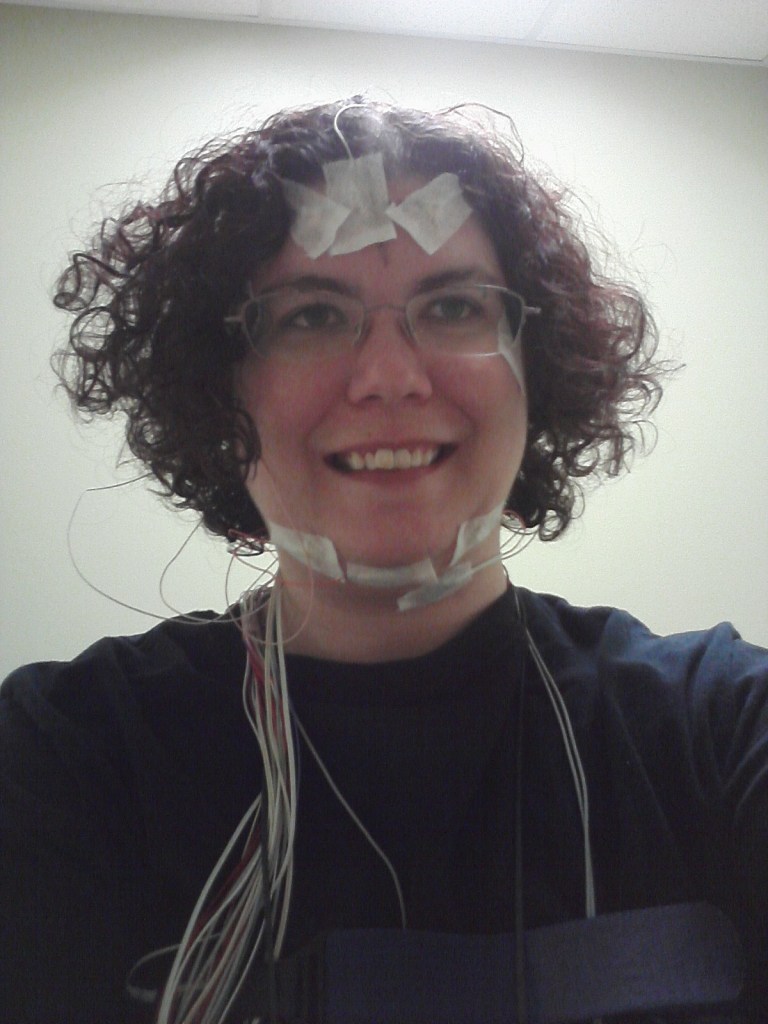
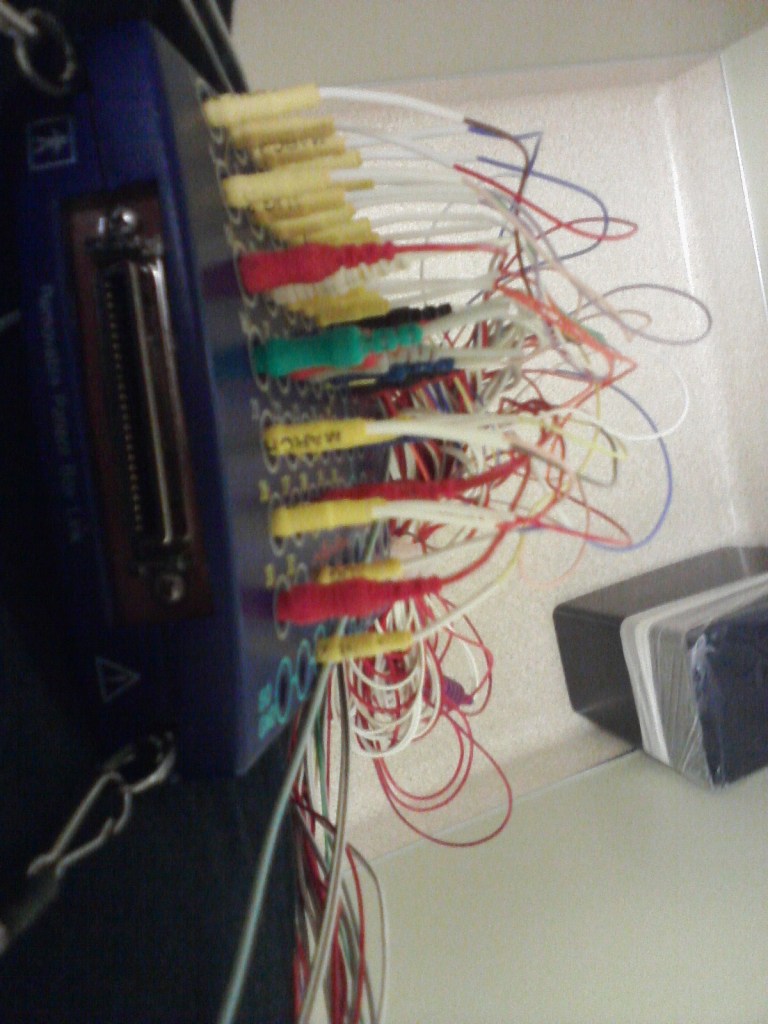
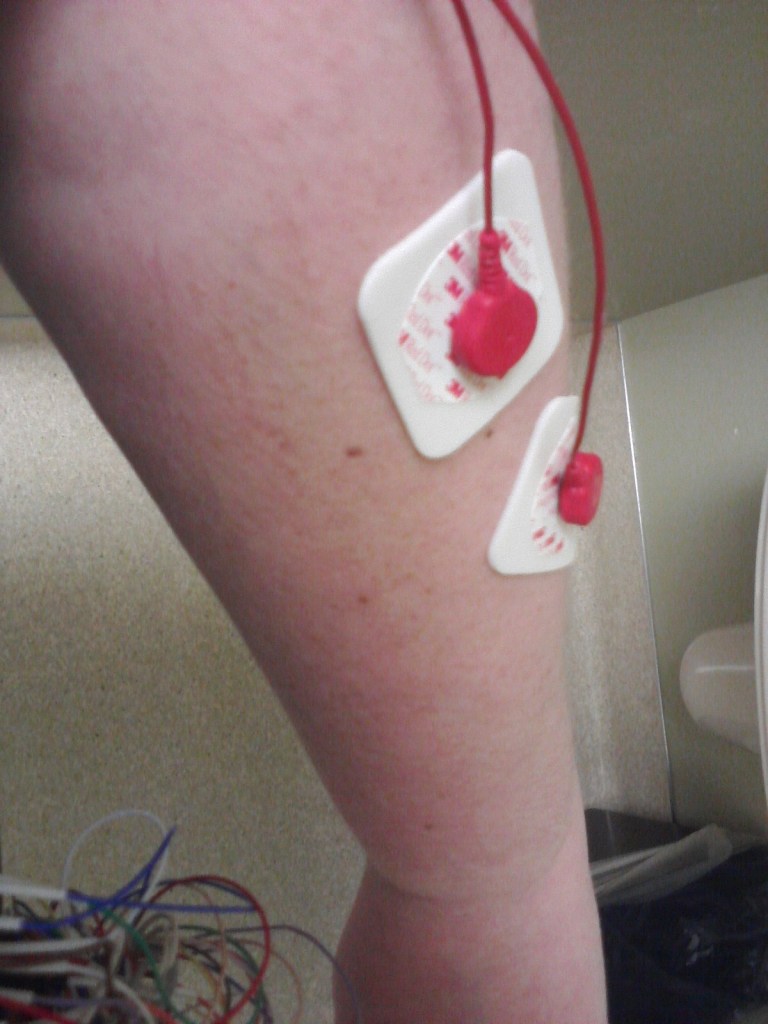
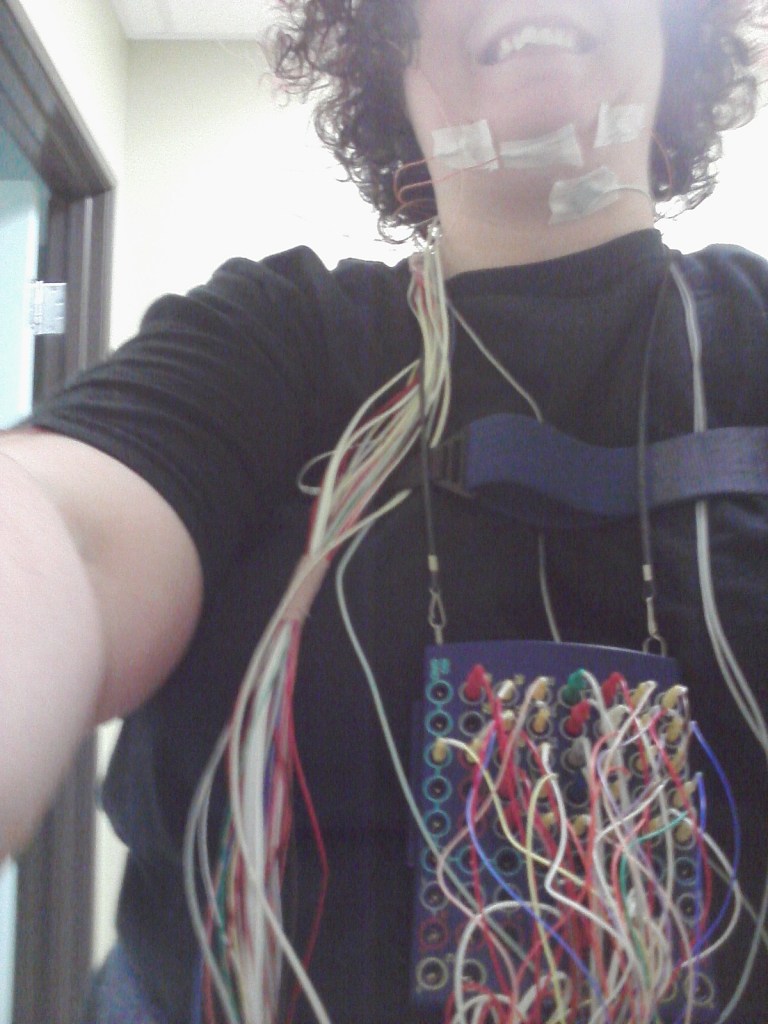
Lights out were at 10 PM. I normally went to sleep around midnight or one. I tossed and turned. Later, going over the results, they asked how long I thought it took to fall asleep? “About an hour.” . . .that was correct.
The room was dark and quiet. No cats. Alegria, who had died a few months earlier, normally slept by my head. Sarafina normally slept behind my knees. Little Buddy slept at my feet. But because of all the wires, I couldn’t move very easily.
Unfortunately, I did have to use the bathroom during the night. I cautiously sat up and called out, “Hello?” A voice on the intercom asked what I needed, and someone arrived shortly to unhook everything. I did not like needing assistance.
Lights on was at 6 AM. I don’t think it took an hour to unhook everything, but I don’t recall. Soon I was blearily squinting into the morning sun, waiting for my husband before heading to work.
The study costs $2000, of which I paid 20%.
Shortly after, I received preliminary results: Yes, I have mild sleep apnea. I might need to return for another study, though only hooked up to a CPAP machine.
Then another phone call: actually, I needed to discuss the results with the sleep center’s director. During REM sleep I have severe apnea: I woke up (because I couldn’t breathe) 40 times an hour. That explained a lot.
I would have to wait at least a month before a second sleep study. I already had an appointment with my sleep doctor, so I went to see her to discuss the study’s results. After going through them together, she suggested I skip the second study and get started with a CPAP (which are, or at least were, prescription: it’s very hard to just buy a machine, never mind that they cost hundreds of dollars). I agreed.
My hypnogram showed that, strictly speaking ,I have mild sleep apnea: about 6 an hour; 4 or less is normal. But I also have hypopnea, which is basically partial sleep apnea (apnea = completely stop breathing, hypopnea = partially stop breathing), and when you factor that in, it goes to the 40 times an hour figure, particularly in REM sleep. So it’s mild, but a lot.

I returned to the sleep clinic to get my CPAP. The machine was beautiful, sleek black and gray with a computer screen and tiny SD card. A hose attached to a mask attached the machine to my face. There were a variety of sample masks to try on; I settled on a nasal mask that completely covered my nose. The machine was a Philips Respironic, which served me well for nearly a decade.
The machines were recalled in the early 2020s because of a breakdown in the foam. I got a new machine in 2023, as well as a replacement from Philips. I use that smaller replacement machine when I travel, though my understanding is that it can also pose health issues. Whatever.
It was difficult to get used to sleeping with the CPAP. It took a few weeks. I didn’t like the feel of the mask on my face. I didn’t like getting tangled up in all of the tubing. I didn’t like looking like a complete goofball while wearing it.
But I did like being able to get some fucking sleep.
The CPAP changed my life. I wasn’t cured and still had sleep issues. However, the CPAP machine allowed me to sleep better than I had since I was at least a teenager. I had a decrease in nightmares, as well.
These days, I literally can’t sleep without it. I wake myself up because I’m snoring, or even worse, because I’m choking because I can’t breathe. I am grateful for that machine.
 Bad Sleeper
Leave a comment